This chapter explored how LLMs and related generative systems can help people make music. We looked at three ways of working with them: developing ideas through suggestions, playing together in real time, and delegating tasks in music software. Each offers a different kind of help and gives creators different decisions to make.
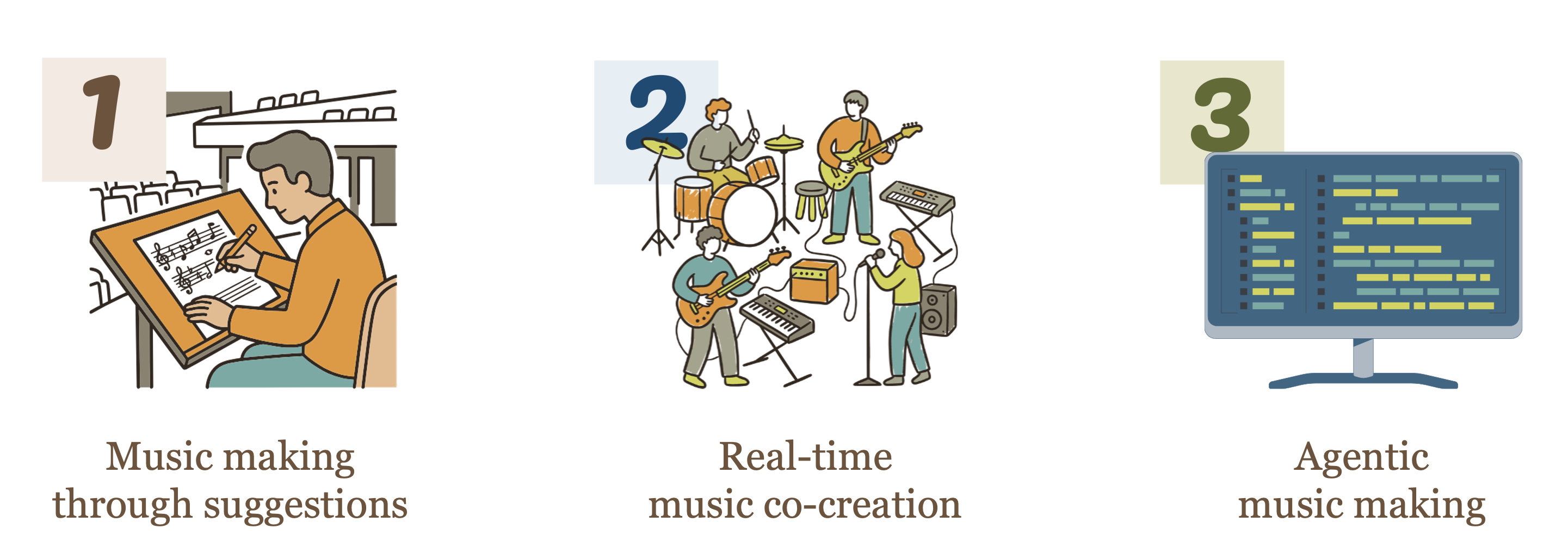
Table 1:The three approaches and the choices they offer creators.
| Part | What the system contributes | What the creator can do |
|---|---|---|
| 1 · Suggestions | Musical ideas and editable material | Guide suggestions, compare alternatives, and develop selected parts |
| 2 · Real-time co-creation | Musical responses during a performance | Shape the exchange through playing and respond to the system’s contributions |
| 3 · Agentic music making | Actions in patches, sessions, and effects chains | Set goals, review changes, and continue editing in the same tools |
Returning to the creator’s experience
In Part 1, we focused on agency, control, exploration, and ownership as four aspects of the creative experience. We also introduced four design considerations for suggestion systems. These are useful starting points for examining the other approaches, though their practical meaning changes with the interaction.
Agency: Am I deciding the creative direction?
Control: Can I make the changes I want?
Exploration: Can I try different ideas and discover new possibilities?
Ownership: Does the work feel like mine?
Steerable: Can I guide and redirect it?
Modular and editable: Can I work with individual parts of the result?
Diverse: Does it offer different possibilities to explore?
Contextual: Does it respond to the work already in progress?
During a performance, control might mean changing the accompaniment through playing, or knowing what the system is about to do. When working with an agent, it might mean limiting the scope of a task or reviewing changes before proceeding. In both cases, having controls available is only part of the question; they need to make sense within the musician’s way of working.
Open questions
How should systems support repeated use and revision? A useful suggestion may be changed, combined with other material, or revisited later. Evaluating a single output tells us little about how a system supports these decisions across a session or a longer project. How can models and interfaces better support that process, and how should we evaluate their contribution?
What new musical experiences could these systems enable? An agent trained on a musician’s own playing, or a model that transforms live audio, offers possibilities beyond completing an existing task. What might musicians discover through sustained use, and which forms of interaction would they want to keep developing?
How much should the system do, and when? A musician may want a small suggestion at one moment and help carrying out a whole sequence of edits at another. How can systems let creators adjust that level of involvement without making the interaction cumbersome?
Across these questions, the musician’s experience remains central. The systems in this chapter offer ways to try ideas, play with a responsive partner, and get help with production tasks. Their value will depend on how well people can make those capabilities part of their own creative practice.